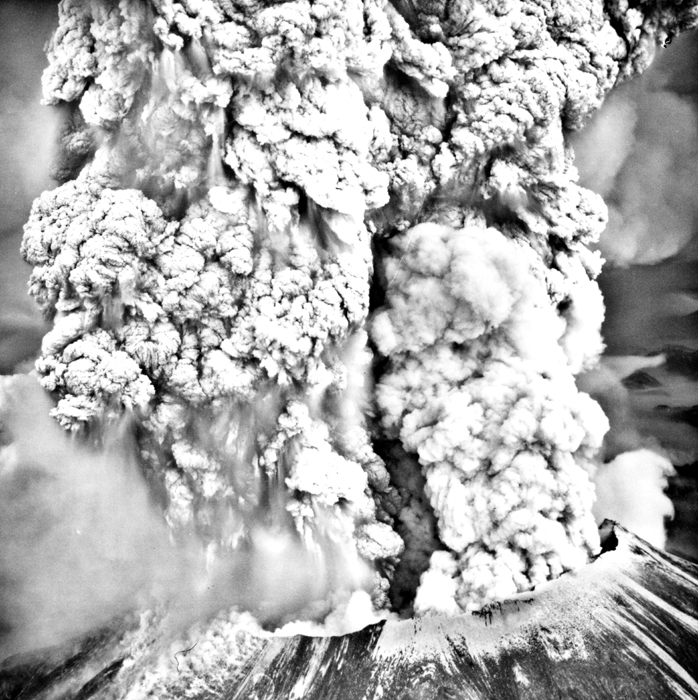
 The world’s largest volcanic eruptions occurred 251 million years ago in Siberia.
The mass extinction at the end of the Late Permian (approximately 251 million years ago) was the largest mass extinction event that the Earth has ever known. Fully 70% of all vertebrate land species and between 80–90% of all marine species disappeared. So many species disappeared that this mass extinction event is known as the Great Dying.
 Word Link
Unlike the discovery of the Chicxulub Crater and the death of the dinosaurs, there does not appear to be any obvious evidence highlighting what catastrophic event was responsible for this mass extinction. Recently, however, scientists have focused on the enormous lava flows in Siberia, Russia that occurred 251 million years ago. These flows were the result of the world’s largest known volcanic eruptions. The date of these eruptions seems to correspond exactly with the time of the Great Dying, and since no other catastrophic event has been identified for that time, many scientists are now convinced that there is a clear connection between this period of extreme volcanism and the Great Dying.
These lava flows are known as the Siberian Traps. An estimated 2 million km3 (approximately 500 million cubic miles) of lava covered an area approximately the size of Europe. The volcanic activity that caused these lava flows would have sent large quantities of carbon dioxide (CO2) and sulfur dioxide (SO2) into the atmosphere. Carbon dioxide is a greenhouse gas, and large quantities of it may have lead to global warming. Large quantities of sulfur dioxide in the atmosphere could have resulted in toxic sulfuric acid falling as acid rain. This combination of global warming and acid rain would have had a deadly effect on the environment and on the food chain. It is the prime candidate to account for the Great Dying.