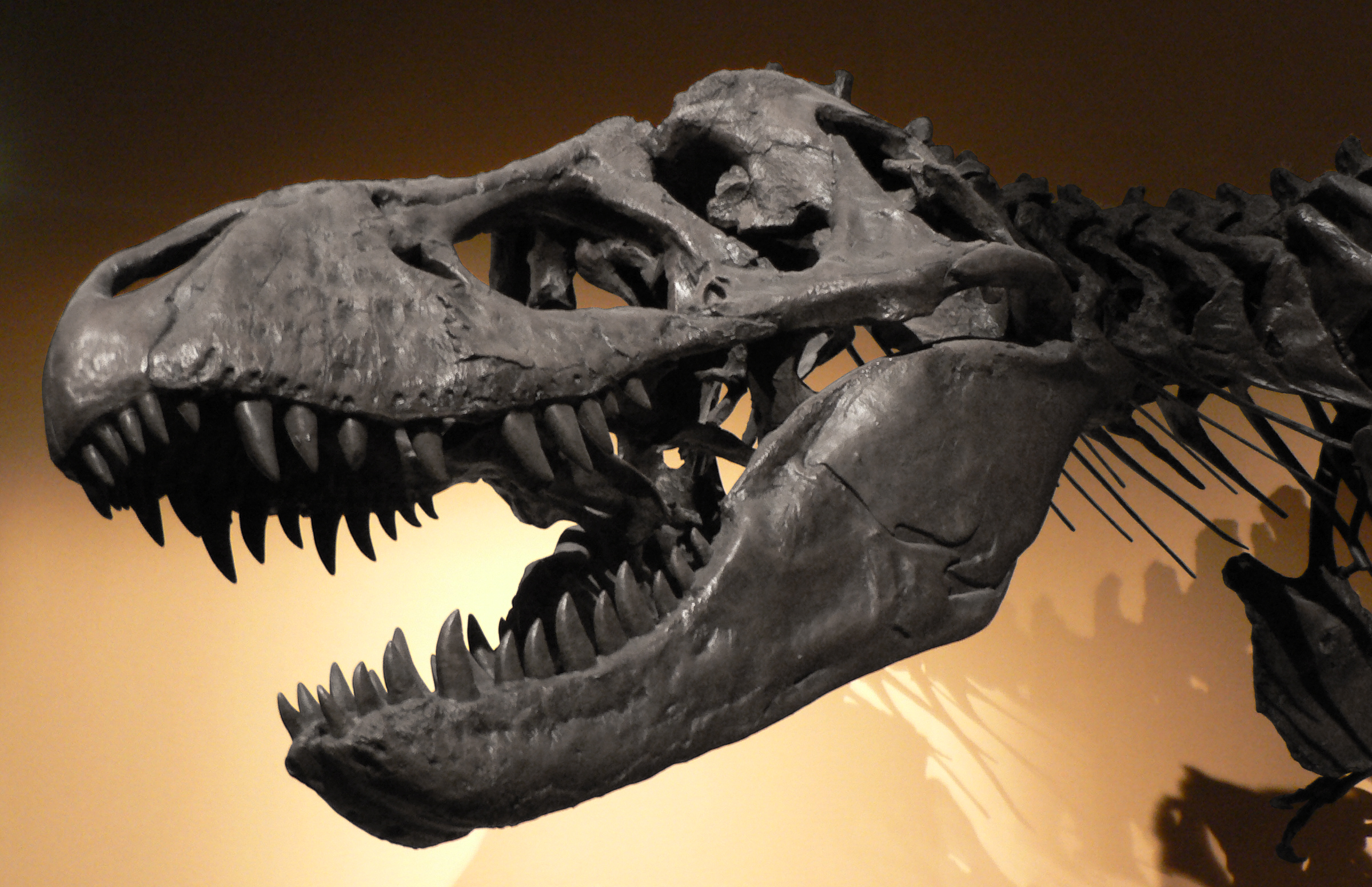
 Most of the species that have ever lived are now extinct.
At least ninety-nine percent of all of the species that have ever lived are now extinct. Extinction is actually quite common in Earth’s history. It accounts for many of the divisions in the geologic timescale.
Even among all of these extinctions, however, there are five in particular that stand out. These five are extreme examples of what is known as a mass extinction. A mass extinction is marked by a relatively short time period during which a large proportion of species with a worldwide distribution disappear from the fossil record. The five great mass extinctions are:
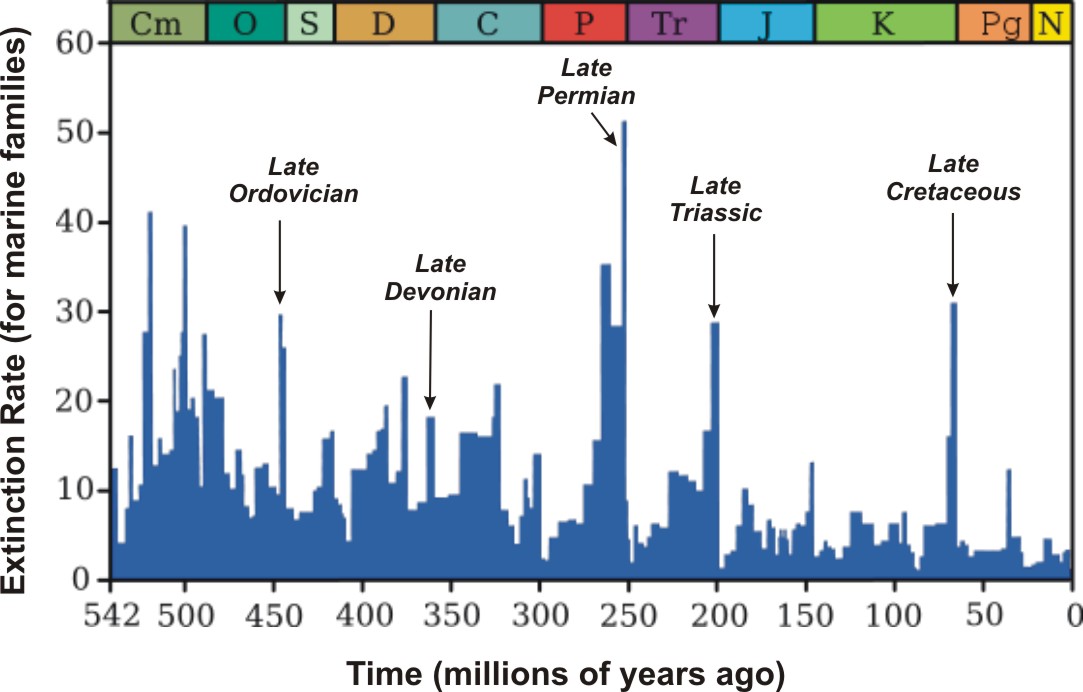 The graph illustrates the five major mass extinctions by comparing the rate of marine extinctions over time.
- Late Ordovician (approximately 444 million years ago)
- Late Devonian (approximately 359 million years ago)
- Late Permian (approximately 251 million years ago)
- Late Triassic (approximately 199.6 million years ago)
- Late Cretaceous (approximately 65.5 million years ago)
 Did You Know?
Some scientists are convinced that we are in the midst of the sixth great extinction. This extinction, however, is not the result of a natural disaster, but is instead the result of human activity such as deforestation, agricultural practices, overhunting, and pollution.
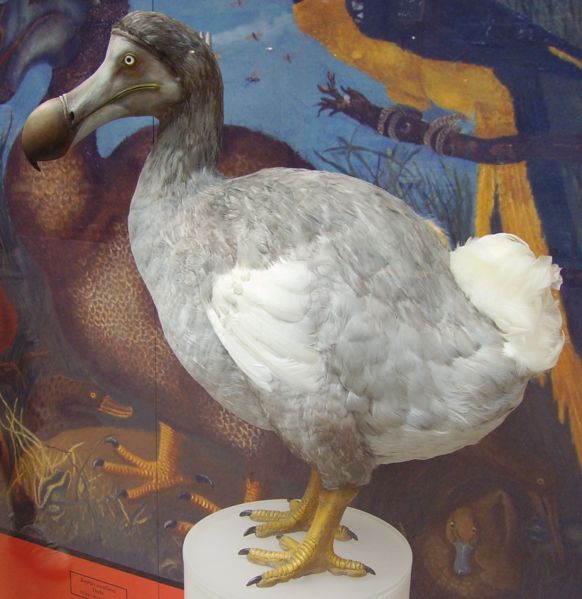
The Dodo, a flightless bird on the island of Mauritius, was hunted to extinction by the end of the seventeenth century.
Each of these five great extinctions was precipitated by a catastrophic event, a short timescale event that has long-term effects on life and the environment. Many catastrophic events, including sea level changes, continental drift, volcanism, global warming, global cooling, and impact events, have been offered as explanations for mass extinction. The next two sections in this lesson will examine the two greatest mass extinctions, and the catastrophic events that might have caused them.