G1-2
Relative Age
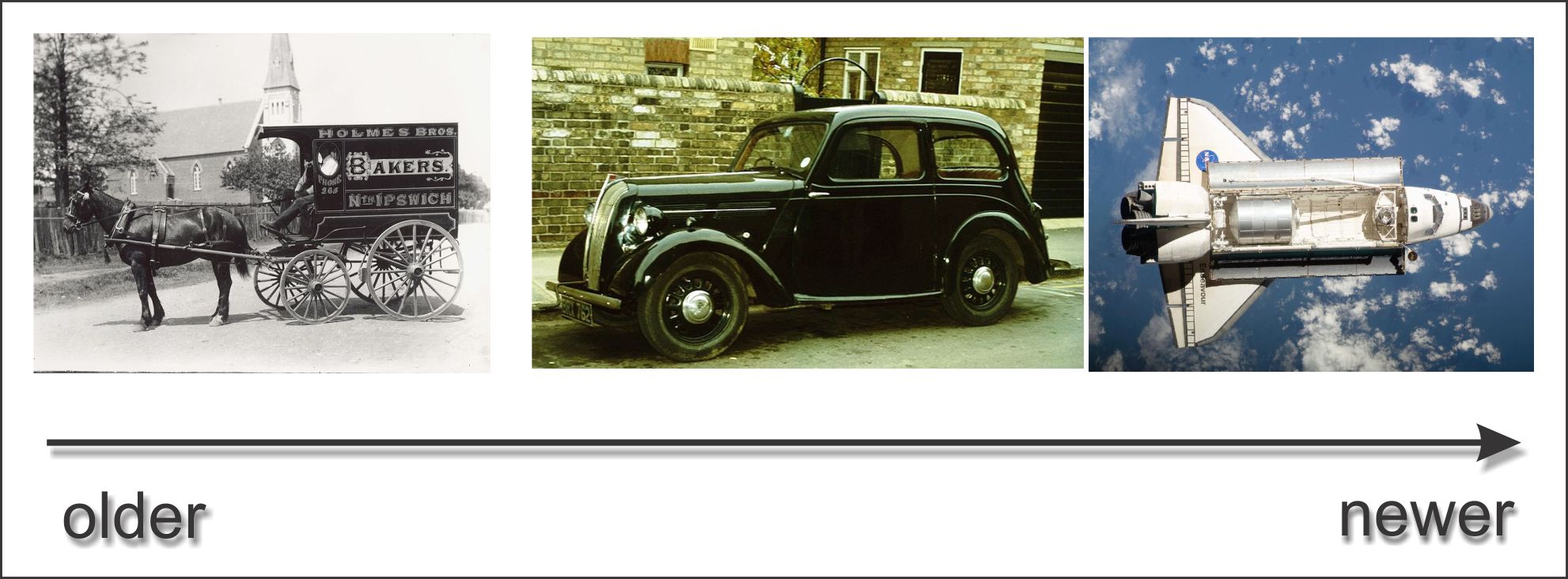 Relative age allows us to place these three means of transportation in their proper chronological sequence.
Relative age refers to the chronological order in which things occurred, without knowing the actual date of each event. We can, for example, place the horse and buggy, the motor car, and the space shuttle in their proper time sequence without knowing exactly when each device was actually developed.
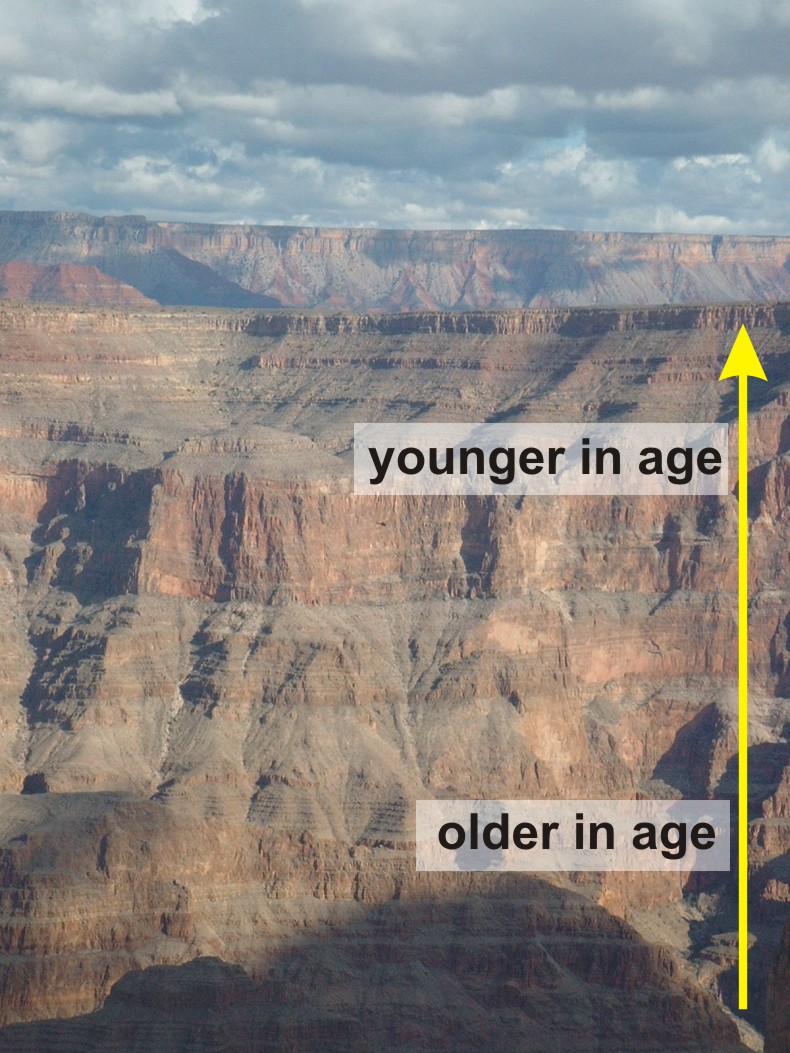 The Grand Canyon is one of the best places in the world to view both original horizontality and superposition.
When applied to geology, the concept of relative age rests on two principles.
- Principle of Original Horizontality: Original horizontality is the concept that sedimentary rocks form in horizontal layers. This means that when we observe rock layers that are still flat, we can conclude that these rock layers have been undisturbed since their original deposition. If the rock layers are bent, then this process must have happened after the original sedimentary rock was formed. The Grand Canyon in Arizona is one of the best places in the world to see this flat layering of rocks.
- Principle of Superposition: The principle of superposition states that in an undisturbed sequence of sedimentary rocks, each layer is older than the one above it. In the Grand Canyon, for example, the deeper one gets in the canyon, the older the rocks become.
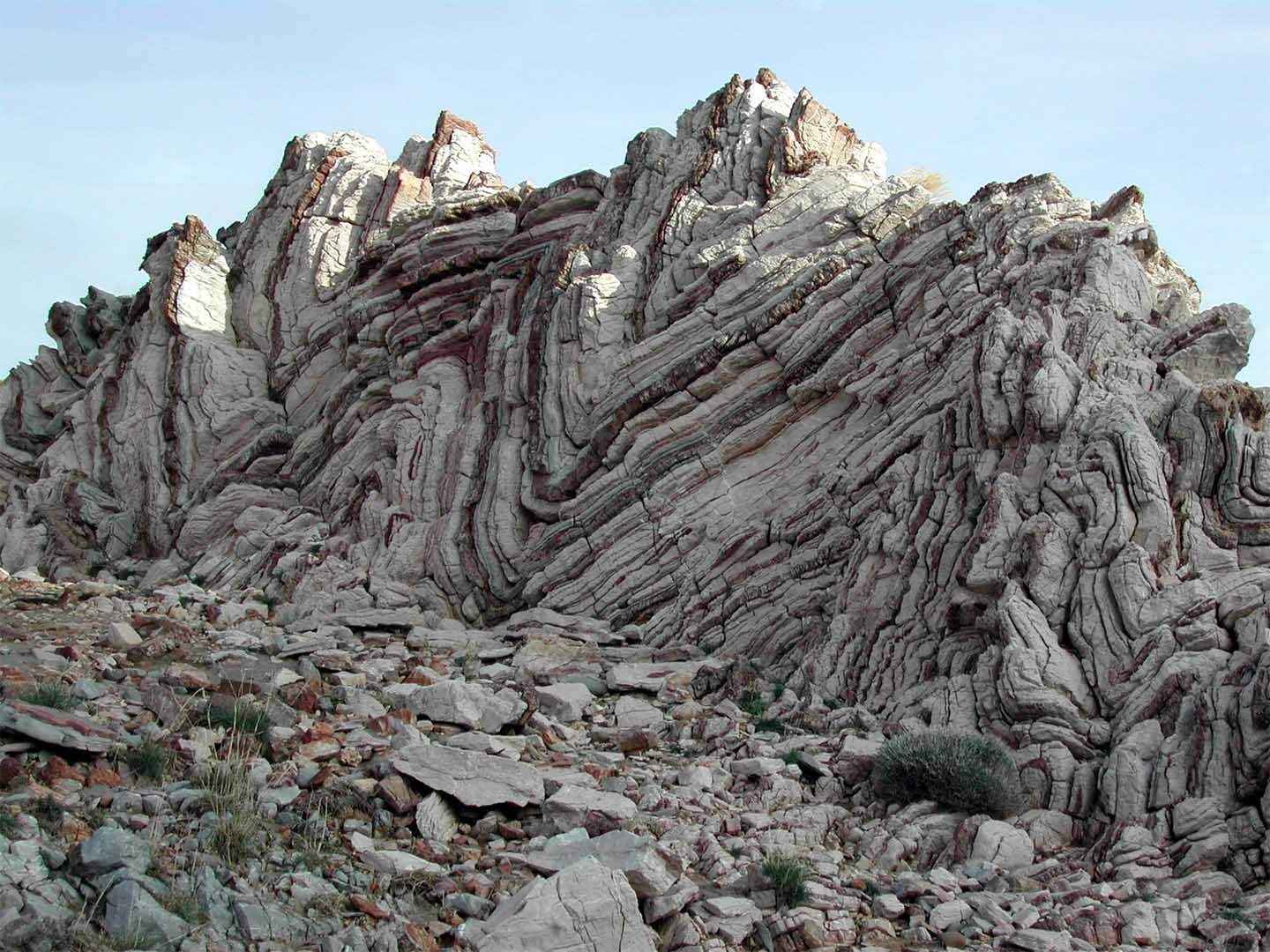 This folding of rocks at Agios Pavlos on the island of Crete must have occurred after the rocks were formed.
 Travel Link