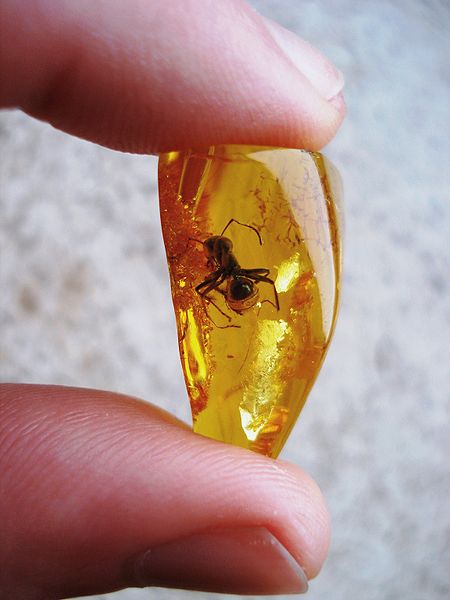
 A 40–50 million year old ant “frozen” in amber.
Scientists can also learn about the Earth’s history through the study of fossils, which is known as paleontology. Fossils are the preserved remains or traces of once-living organisms. Organisms can be preserved as fossils in a number of ways including getting stuck in amber (tree sap) or in tar pits (i.e., the La Brea Tar Pits in Los Angeles). Fossils can also be formed through the mineral replacement of an organism’s hard parts (i.e., petrified trees), and through molds and casts made of dissolved organic matter.
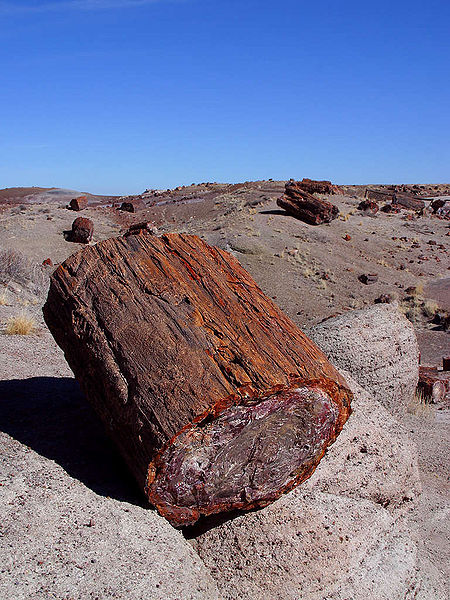 This 225-million-year-old log is actually petrified wood from The Petrified Forest National Park in Arizona.
Fossils are important because they can give us important information about past environmental conditions. Fossils are also important because similar fossils found in widely different locations can be key indicators in determining and correlating the ages of rocks.