Caldera Tourist
Calderas can be quite astonishing to see because of their sheer size. Although many calderas are inaccessible to the average traveler because of their location, there are some scenic calderas that are quite accessible.
Crater Lake, in Oregon, was formed as a result of a massive eruption of Mt. Mazama approximately 7,700 years ago. All that remains today of this mountain is a huge caldera with a diameter of 9.7 kilometers (6 miles). This scenic caldera, partly filled with deep blue water, is the centerpiece of Crater Lake National Park. Crater Lake, with a depth of 594 meters (1,950 feet), is actually the deepest lake in the United States and the seventh deepest lake in the world. Crater Lake is accessible to everyone thanks to a ring road, numerous observation points, and boat rides on the lake.
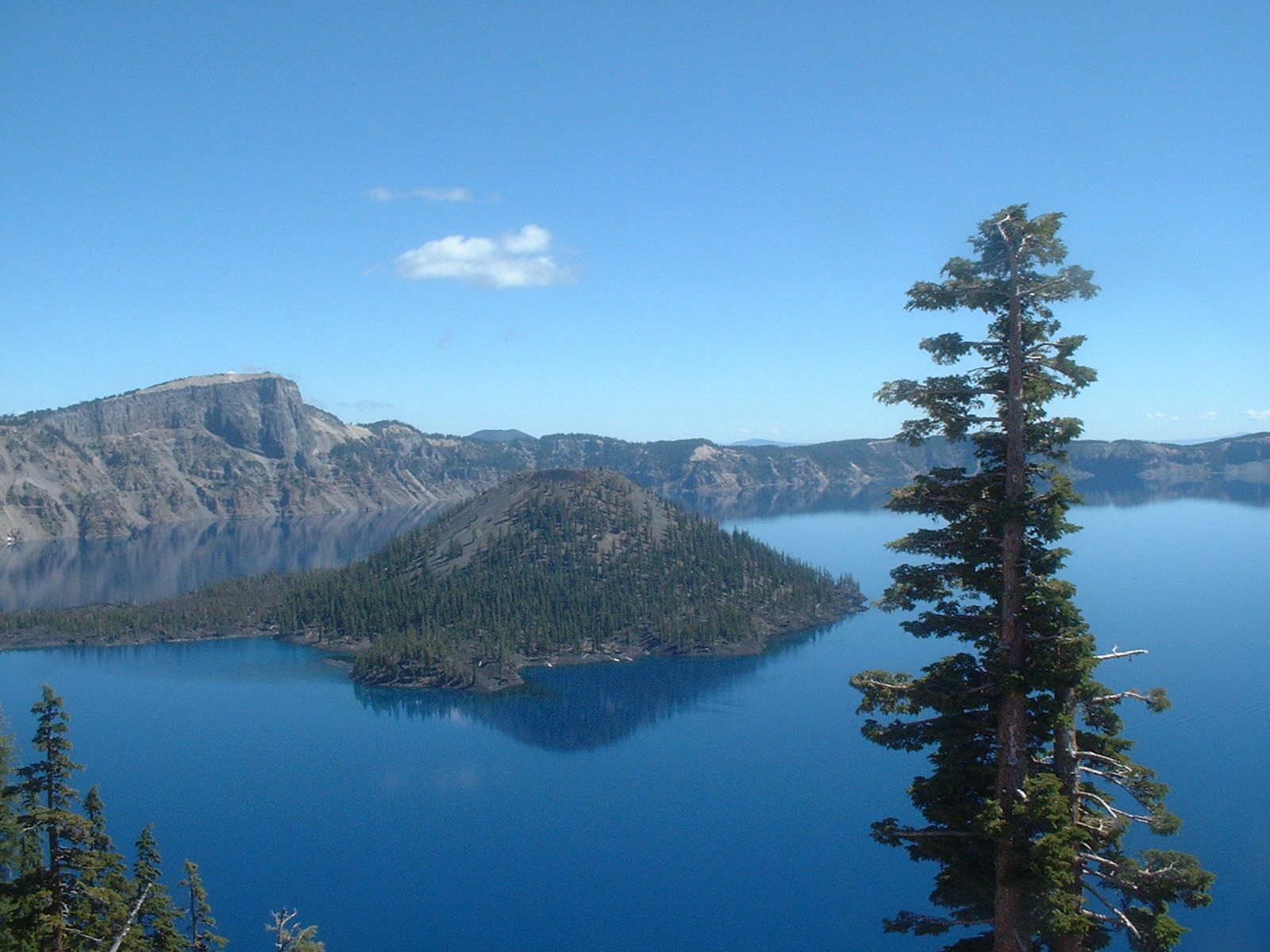 Wizard Island, in Crater Lake, is actually a cinder cone.
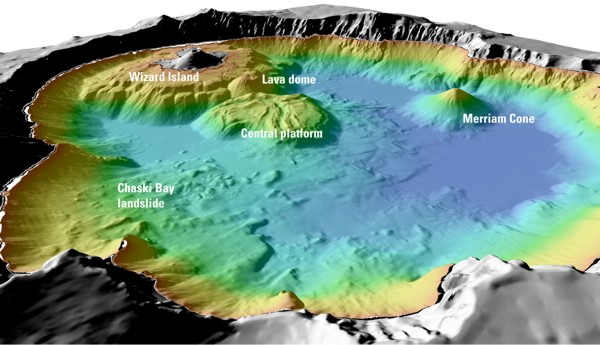 Recent research has carefully mapped the bottom features of Crater Lake.
Newberry Volcano, also in Oregon, possesses a summit caldera ranging in diameter from 6 to 8 kilometers (approximately 4–5 miles). This volcano's caldera is easily visible from a viewing area from the top of Paulina Peak at a height of 1.2 km (0.75 miles) above the surrounding terrain. The 1,300-year-old lava flows, plainly visible from Paulina Peak, are a particularly distinguishing feature of this caldera. More than 400 cinder cones, two lakes, and a large forest add to the scenic beauty of the area. Today Newberry Volcano is part of the Newberry National Volcanic Monument. It is a major recreational area possessing seven campgrounds, two resorts, numerous hiking trails, and a recreational drive up Paulina Peak.
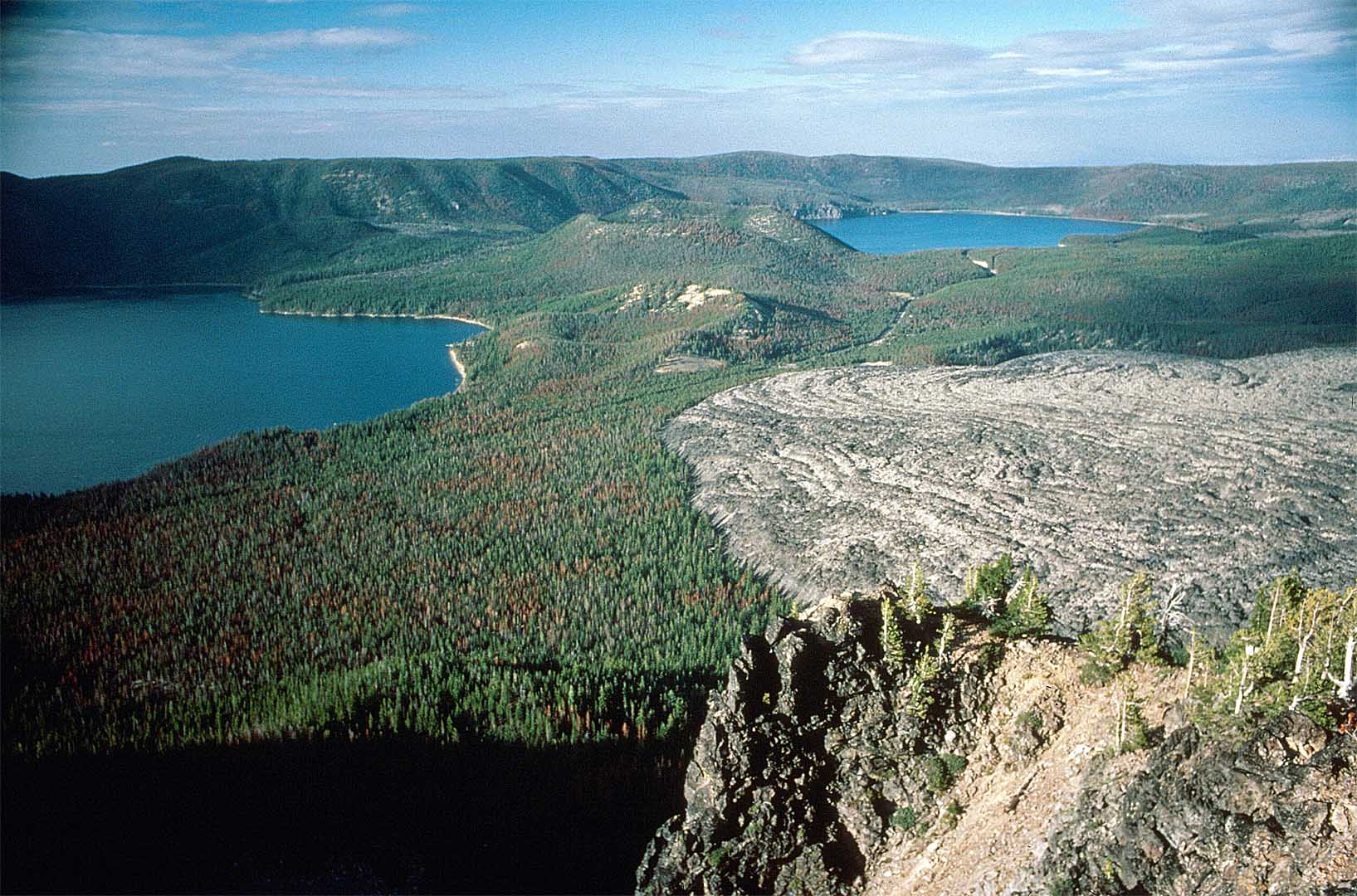 The view from Paulina Peak. The rim of the caldera, the lava flow, Paulina Lake, and East Lake are clearly visible.