 Did You Know?
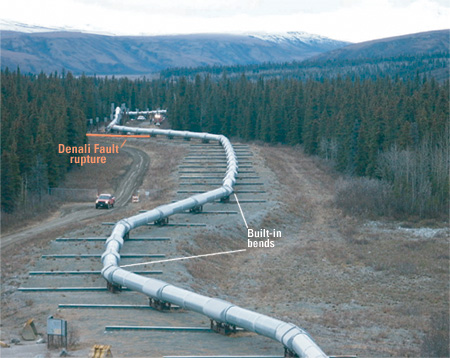
Living in earthquake prone areas is a fact of life for many people. The hazards associated with earthquakes can sometimes be greatly reduced through some simple common-sense safety applications, and through the use of proper construction materials and techniques.
Safety in residential buildings can be dependent on a number of factors including construction material used, the height of the building, and the age of the building. Individuals can reduce hazards in their personal residences by taking precautions like anchoring heavy, movable objects like cabinets, bookshelves, and TVs. Water heaters should also be braced so that they cannot be torn loose from their supports. Residents should have a wrench handy and know how to turn off the gas to their home. Wood-framed houses should be bolted to a concrete foundation.
Larger structures are more earthquake resistant if they have a frame of structural steel, and if they are constructed with reinforced concrete. Even the shape of large buildings can sometimes be a factor in their resiliency to earthquakes. Pyramid shaped structures, for example, have greater stability in earthquakes.
 The shape of the Transamerica Pyramid building in San Francisco enhances stability.
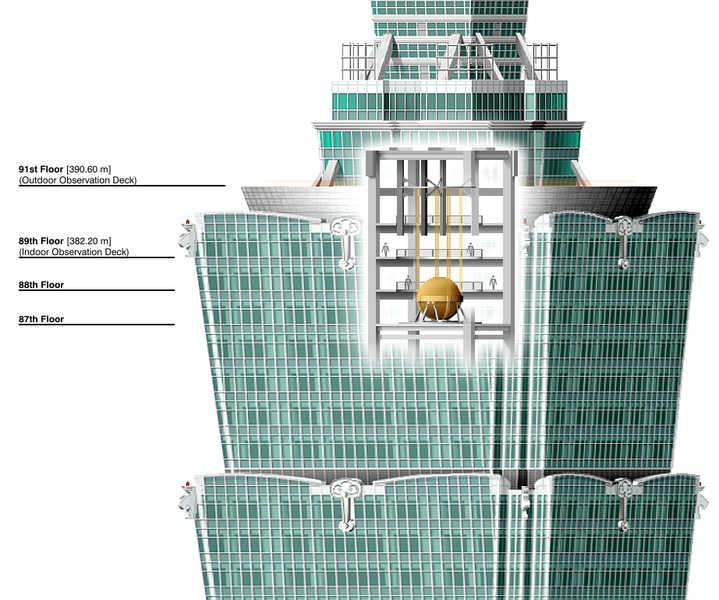 The tuned mass damper in the skyscraper known as Taipei 101 (in Taiwan), the second tallest building in the world, is made of 660 metric tons of steel.
Very tall structures can make use of an innovative device known as a tuned mass damper to control vibrations. A tuned mass damper is a large mass often made of concrete or steel that vibrates in a fashion to oppose other vibrations in a building, thus enhancing stability.
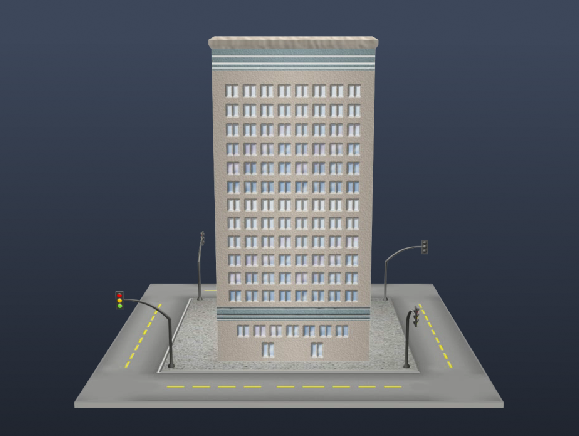 Animation illustrating how a tuned mass damper works.
Math Link
History Link
Animation illustrating how a tuned mass damper works.
Math Link
History Link
Sometimes events can have ramifications that extend far beyond those felt by the individuals immediately affected by the event. The Great Lisbon Earthquake of 1755 was just such an event. Go to History Link...