 Did You Know?
History Link
Did You Know?
History Link
A seismograph is an instrument that is designed to detect and record the presence of seismic waves. It basically consists of two parts:
- a suspended mass with a pen which resists changes in its motion
- a recording roll of paper on which the pen makes a trace
The recording roll of paper is constantly in motion. When seismic waves hit the device, the recording roll will vibrate. The pen above the recording roll, however, will remain stationary because it is attached to a large suspended mass. The pen will trace out a pattern on the paper strip beneath it as the earthquake’s vibrations pass through the device. This traced pattern illustrating the passage of seismic waves is known as a seismogram.
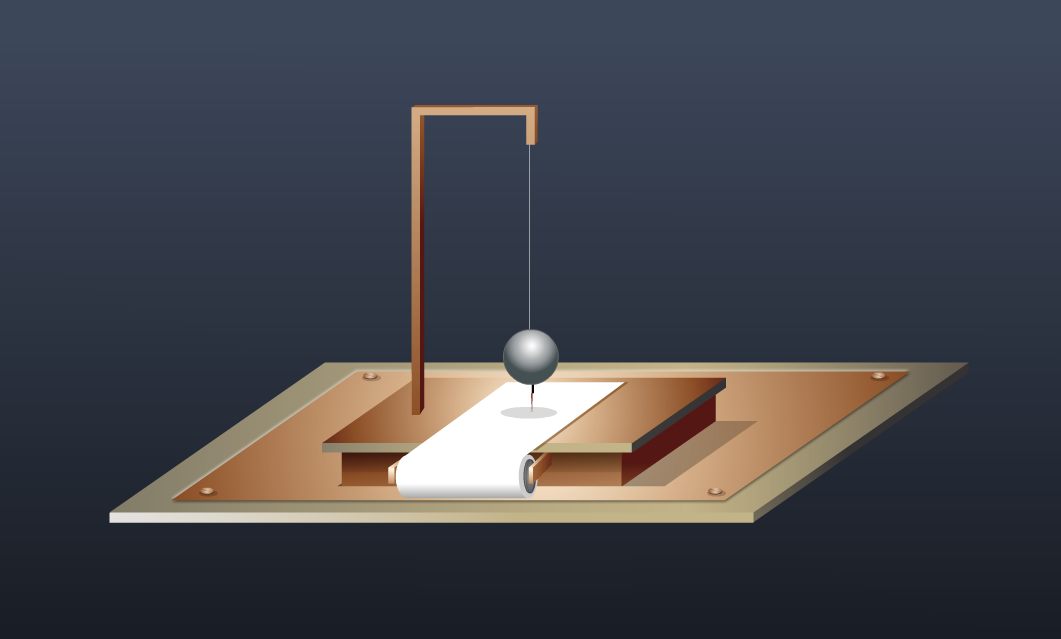 Interactive animation of the operating principles of a seismograph.
Today there are thousands of reporting stations around the world, including the Global Seismographic Network (GSN). The GSN is a 150+ station, globally distributed, state-of-the-art digital seismic network providing realtime monitoring of earthquake activity. If you have an internet connection, you can view a live feed of the latest earthquakes around the world for the past 7 days provided by the United States Geological Survey (USGS).