The wind erosion process of deflation can greatly affect the shape of the landscape. Nowhere was this more evident in modern times than in the area known as the Dust Bowl.
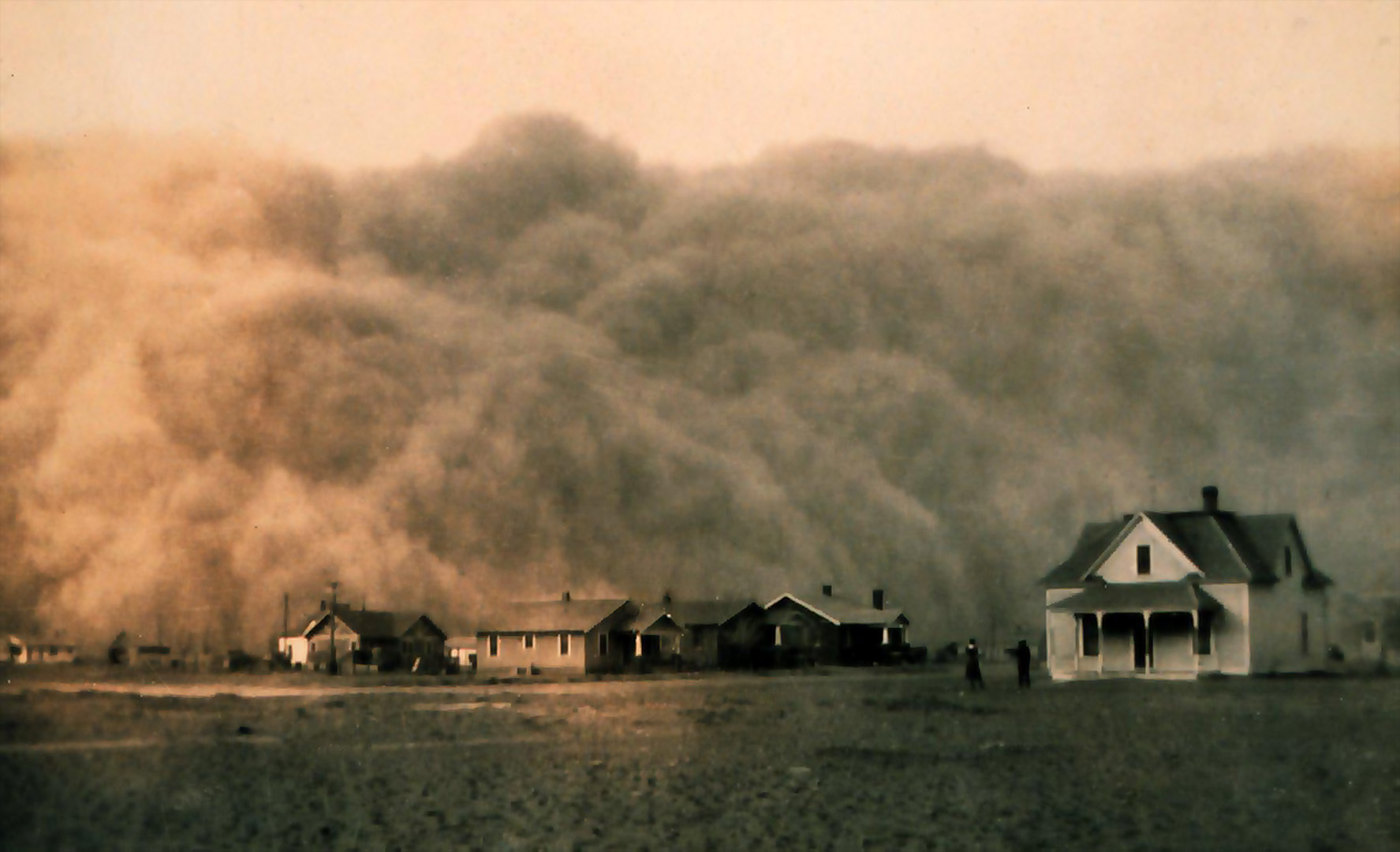 A huge dust storm, typical of the Dust Bowl, approaches Stratford, Texas on April 18, 1935.
The Dust Bowl was the name given to large areas of the American and Canadian prairies that experienced widespread loss of soil cover during the 1930s. The extensive loss of soil cover was caused by a combination of severe drought and poor agricultural practices. With nothing to anchor the soil, huge dust storms became quite common at this time. Some of these dust storms had measured speeds approaching 100 km/h (approximately 60 mph), and these storms literally blew the soil cover away.
The Dust Bowl had huge economic and social costs. Over 400,000 km2 (approximately 150,000 square miles) of land were affected by soil loss, and it is estimated that over 500,000 Americans were left homeless by the Dust Bowl.