D2-1
Mass Movement
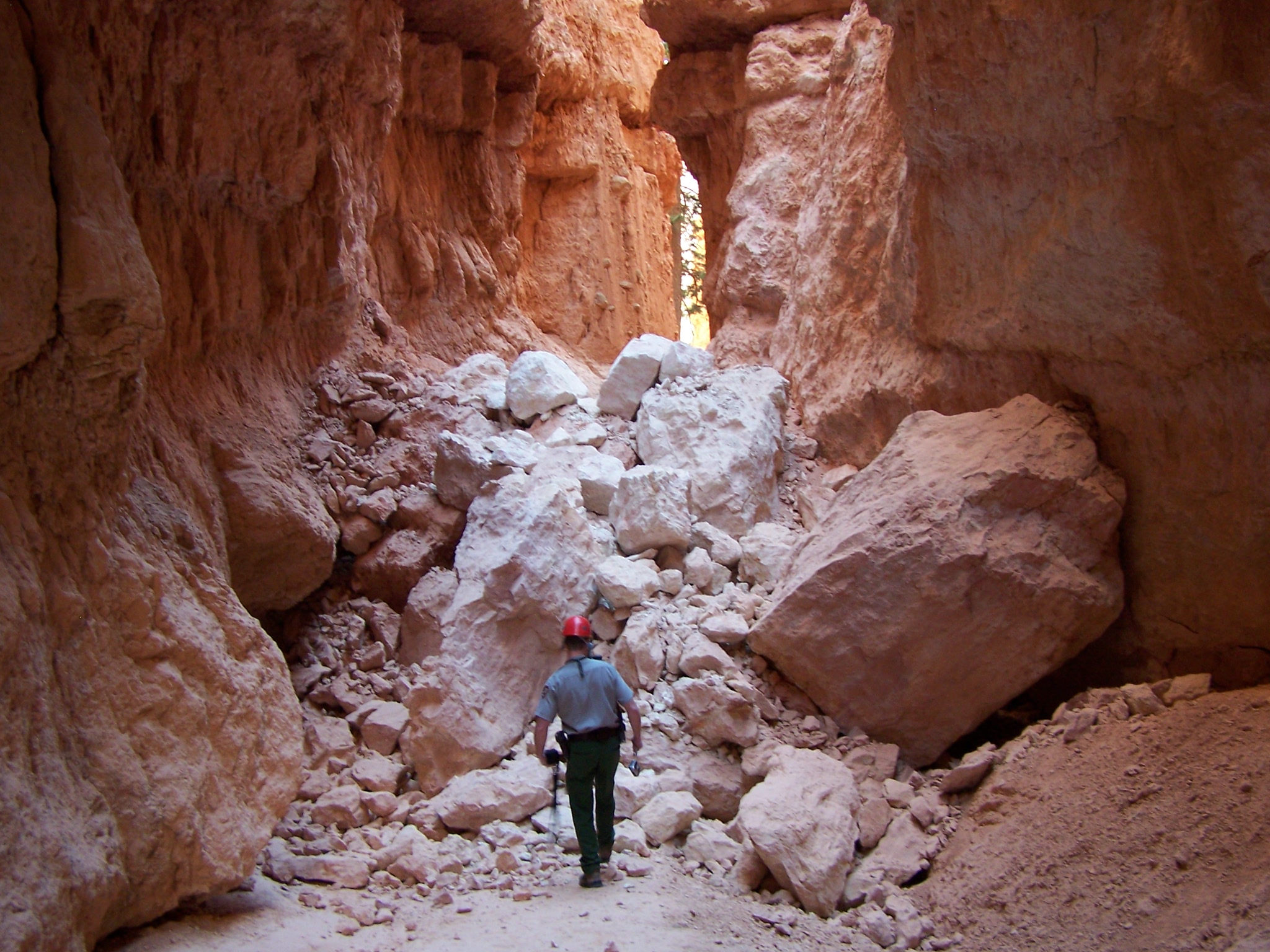 Gravity caused these rocks to fall on May 23, 2006 resulting in the closing of the Navajo Loop Trail in Bryce Canyon National Park in Utah.
Gravity is a force that is constantly acting on everything on the Earth’s surface. This force that causes a suspended object to fall when the object is released acts in a similar fashion on the rock and soil of the Earth’s landforms. The downhill movement of rock and soil under the influence of gravity is known as mass movement (also known as mass wasting).
Factors Influencing Mass Movement
There are four major factors that determine whether Earth material consisting of rock and/or soil will undergo mass movement.
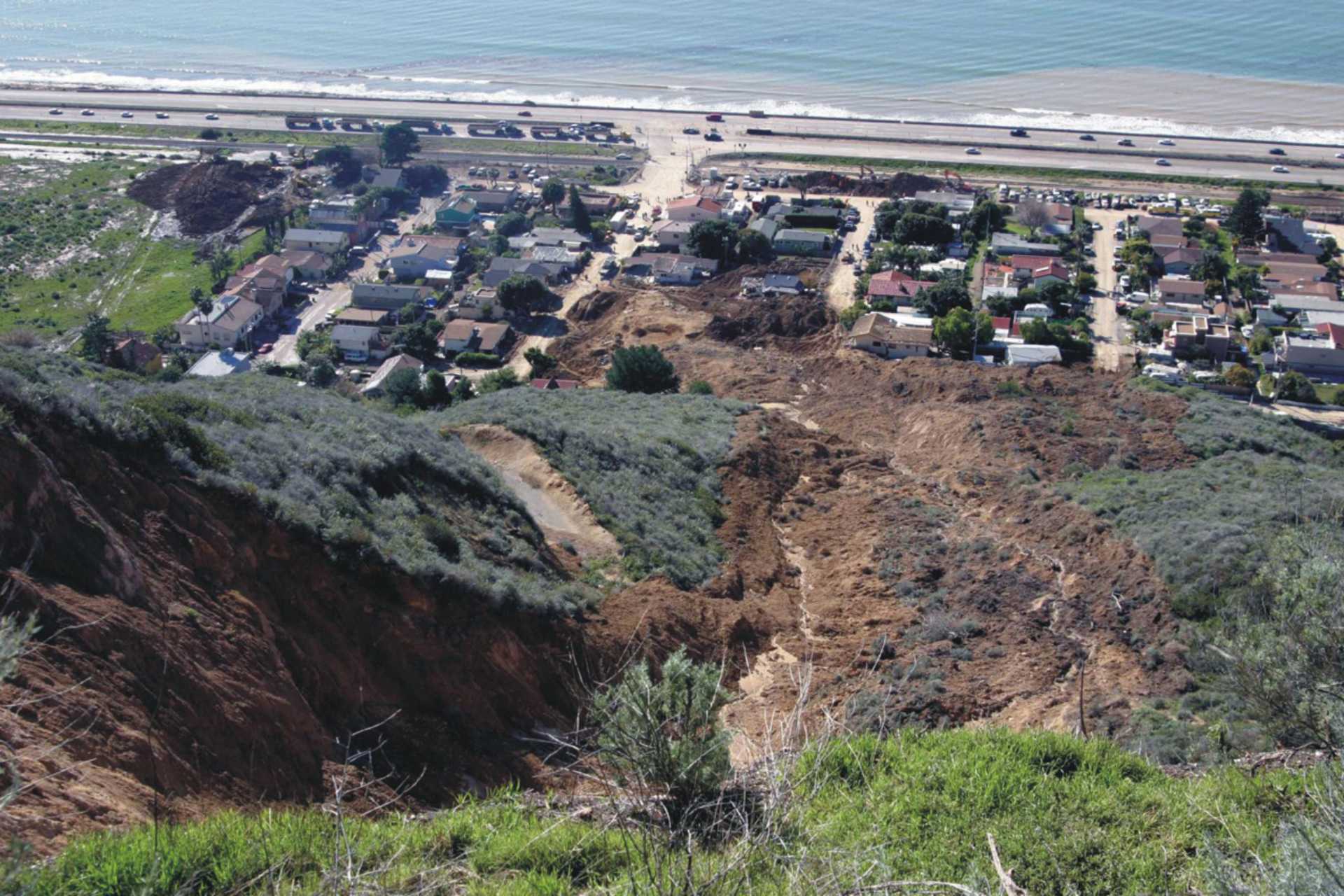 Heavy rainfall triggered this mass movement of soil on January 10, 2005 above the town of La Conchita, California.
- Mass: Objects with greater mass will experience greater gravitational force. This increase in an object’s mass will result in an increased downward pull on the object.
- Friction: Friction between materials is an important factor in determining whether Earth material will start to move. The degree of consolidation of the particles within a material, and their cohesiveness also determines how easily it will flow.
- Trigger: Material may be quite stable until an external trigger suddenly causes it to move. An earthquake, for example, is a common trigger that can suddenly shake material loose resulting in a mass movement of rock and/or soil. (Earthquakes are discussed in detail in Unit E – Earthquakes.)
- Water: The presence of water is a major factor influencing mass movement. Heavy precipitation can drastically increase the weight of soil. Water can also act as a lubricant and reduces the friction between particles of soil and rock.