Michelangelo: The Wonder of Marble
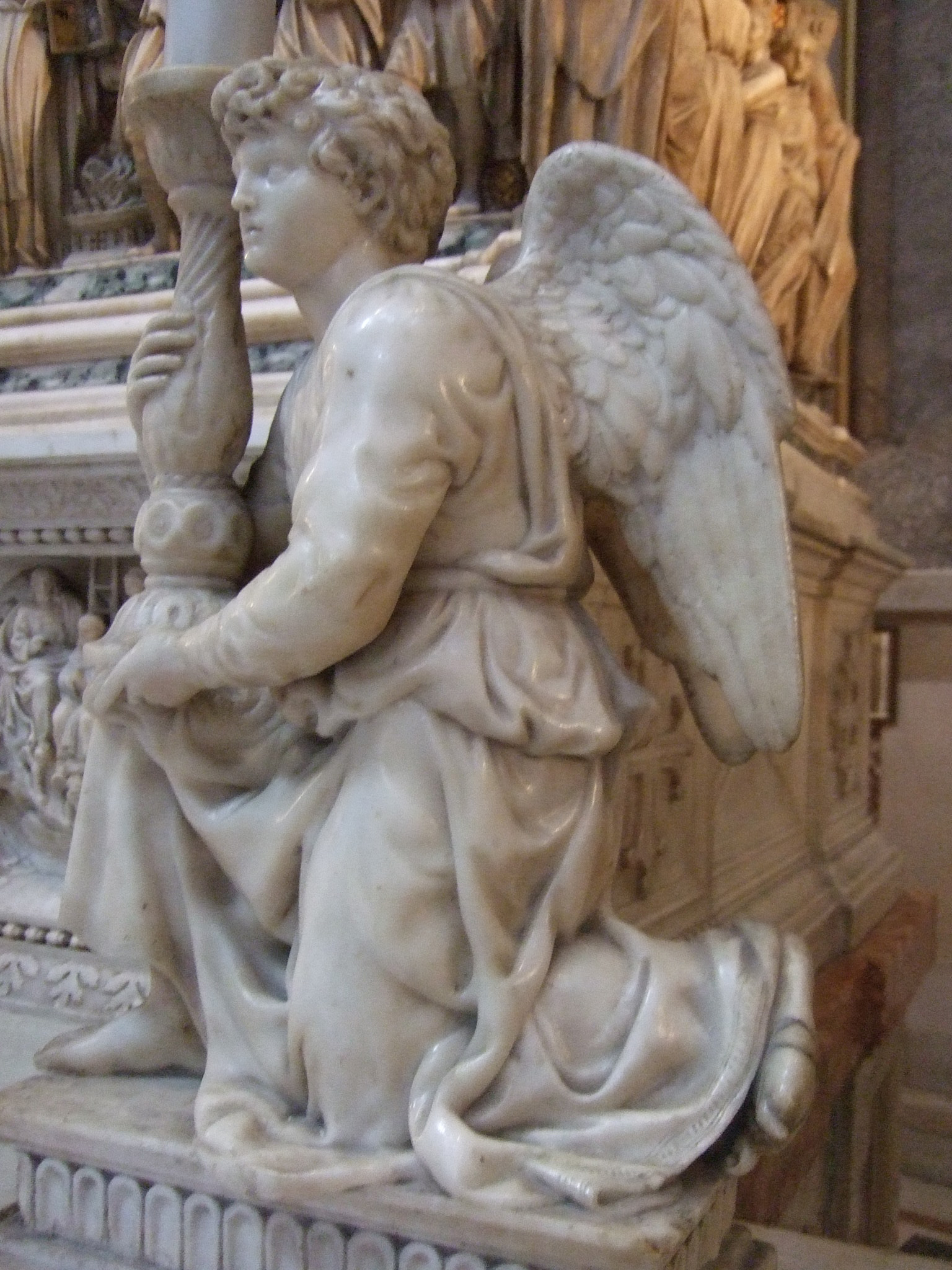 Michelangelo carved his famous Angel sculpture from one solid piece of marble.
Marble is a unique rock that is only formed under a special set of circumstances relating to intense heat and pressure. Marble's unusual properties give it both strength and beauty, two characteristics that have made it a prized material both for construction and artistic purposes. One of the world's most respected sculptors, Michelangelo (1475–1564) worked in marble. Michelangelo preferred to use the pure white marble from the quarries at Carrara, Italy; quarries that are still very active today.
When asked about his creative impulses for a particular sculpture, Michelangelo is famously quoted as saying "I saw the angel in the marble and carved until I set him free." Michelangelo also wrote a great deal of poetry in his lifetime. Although much of his poetry was of a romantic nature, in this poem Michelangelo talks about an artist's legacy.
THE ARTIST AND HIS WORK
How can that be, lady, which all men learn
By long experience? Shapes that seem alive,
Wrought in hard mountain marble, will survive
Their maker, whom the years to dust return!
Thus to effect cause yields. Art hath her turn,
And triumphs over Nature. I, who strive
With Sculpture, know this well; her wonders live
In spite of time and death, those tyrants stern.
So I can give long life to both of us
In either way, by color or by stone,
Making the semblance of thy face and mine.
Centuries hence when both are buried, thus
Thy beauty and my sadness shall be shown,
And men shall say, 'For her twas wise to pine'.
Questions for Comprehension and Understanding:
- What is Michelangelo wondering about in the first few lines of the poem? He is wondering about how it is that sculptures can long outlive the mortal life of their creators.
- What property should good sculpture have in order to "survive their maker," according to Michelangelo? Michelangelo clearly states in the poem that sculpture that survives should embody "Shapes that seem alive."
- What do you think Michelangelo means when he says "Art hath her turn, And triumphs over Nature"? He means that Nature is transient and will change with time. The artist will eventually die. The artist's creations, however, like sculpture, will endure for a long time.
- Michelangelo refers to "time and death" as "those tyrants stern." What does he mean by this? He means that time and death are unforgiving. Time will always pass, and death will always occur.
- Michelangelo states that the artist can "give long life to both of us." To what two people is Michelangelo referring? He is referring both to the artist's subject and also to the actual artist.
- Michelangelo refers to two forms of art in the poem: "by color" and "by stone." To what two art forms is Michelangelo referring? He is referring to painting and to sculpture.