C3-4
Types of Sedimentary Rock
Geologists classify sedimentary rocks into three basic types, based on what they are formed from.
 Word Link
- Clastic Sedimentary Rock: The most common form of sedimentary rock is formed from sediments containing particles of other rocks that have been weathered or eroded away. Rock that forms from these sediments is known as clastic sedimentary rock. Particle size is a convenient method of further subdividing this type of rock.
| Sediment | Clay | Silt | Sand | Gravel |
| Particle Size | < 0.004 mm (very fine) |
0.004–0.063 mm (fine) | 0.063–2 mm (medium) | > 2 mm (coarse) |
| Example |
Shale |
Siltstone |
Sandstone |
Conglomerate |
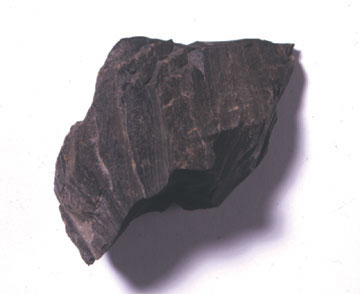
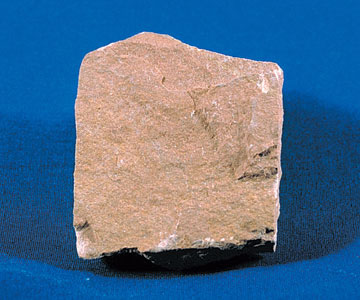

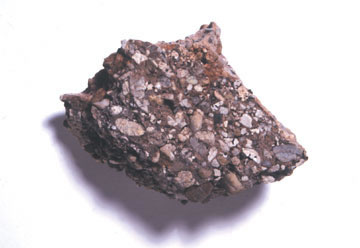 Did You Know?
Shale is the most common type of sedimentary rock. The next most common type is sandstone.
- Chemical Sedimentary Rock: Chemical sedimentary rock forms when dissolved minerals come out of solution. This is similar to the process that leaves a crusty mineral film behind as water evaporates from a glass. Gypsum and rock salt are formed from dissolved minerals that have come out of solution.
- Organic Sedimentary Rock: Sedimentary rock is also formed from the remains of once-living organisms. Chalk, made from the shells of microscopic organisms, is an example of this type of rock known as organic sedimentary rock. Coal, formed primarily from the decayed remains of dead plants, is the best known example of an organic sedimentary rock.
Travel Link
Math Link
Calculate the sedimentation rates for different sediment particles. Go to Math Link...
Try This!
Coal Reserves
Coal is an important source of energy for many parts of the world.
- Click here to add in country borders to the world coal reserves data in the main view panel.
- Rotate the globe to observe coal reserves as they are distributed across the planet.
Which countries have large coal reserves?
The U.S., Russia, China, and Australia are all nations that have large coal reserves. (The United States has the largest coal reserves of any nation in the world.)