C3-1
Formation of Igneous Rock
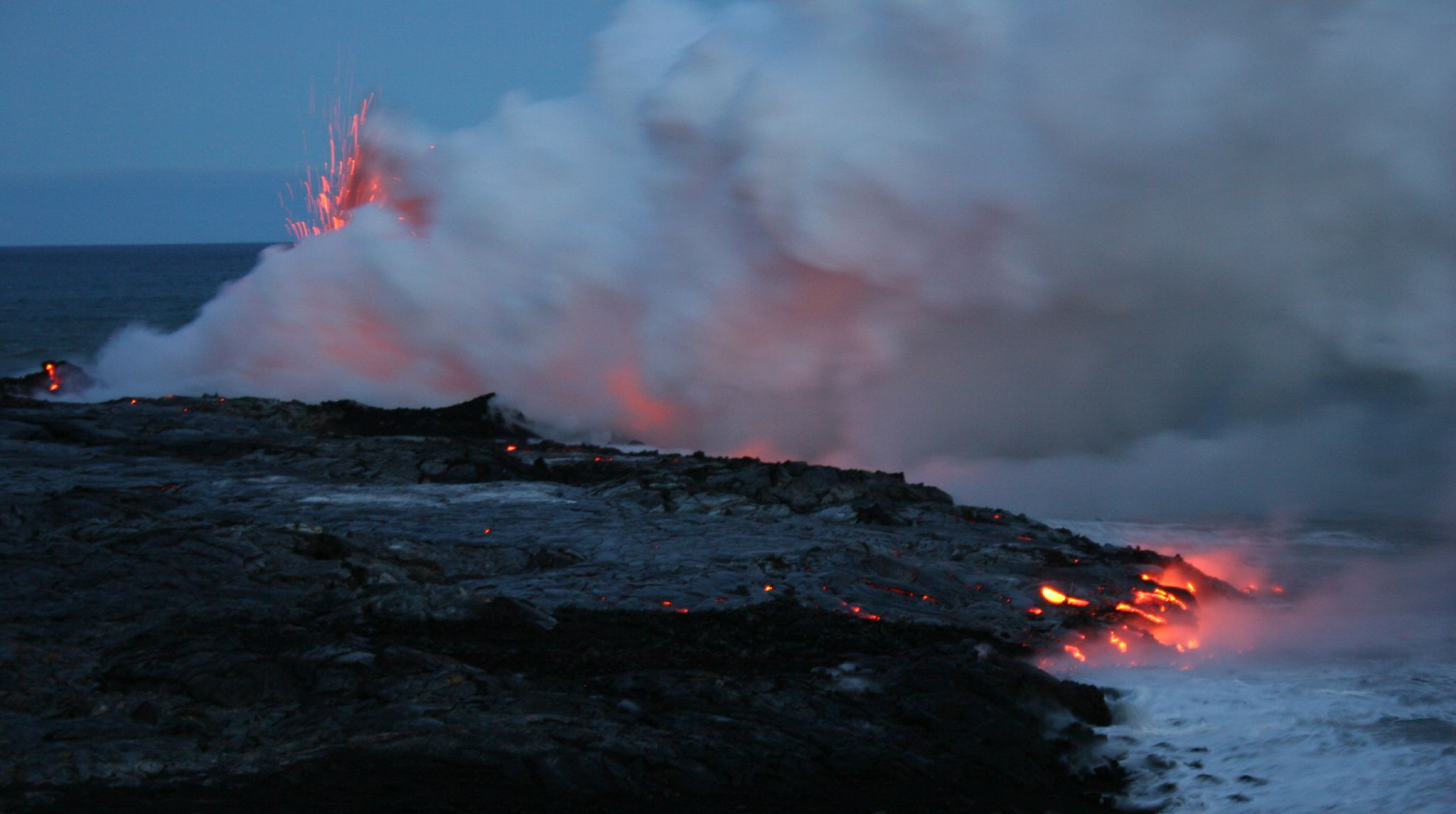 Igneous rock forms as lava cools.
Igneous rocks are formed when molten rock from the Earth’s interior (magma) or on the Earth’s surface (lava) cools and hardens. The temperature needs to drop below 650° C (1,202° F) in order for this formation to happen.
Crystals will start to form as the rock cools below its melting point in a process known as crystallization. The size, shape, and arrangement of the crystals, or make up of a rock, are known as its texture. It is texture that helps geologists categorize igneous rock into two major types.
 The figures on Mount Rushmore in South Dakota are carved from granite, an igneous rock.
 Try This!
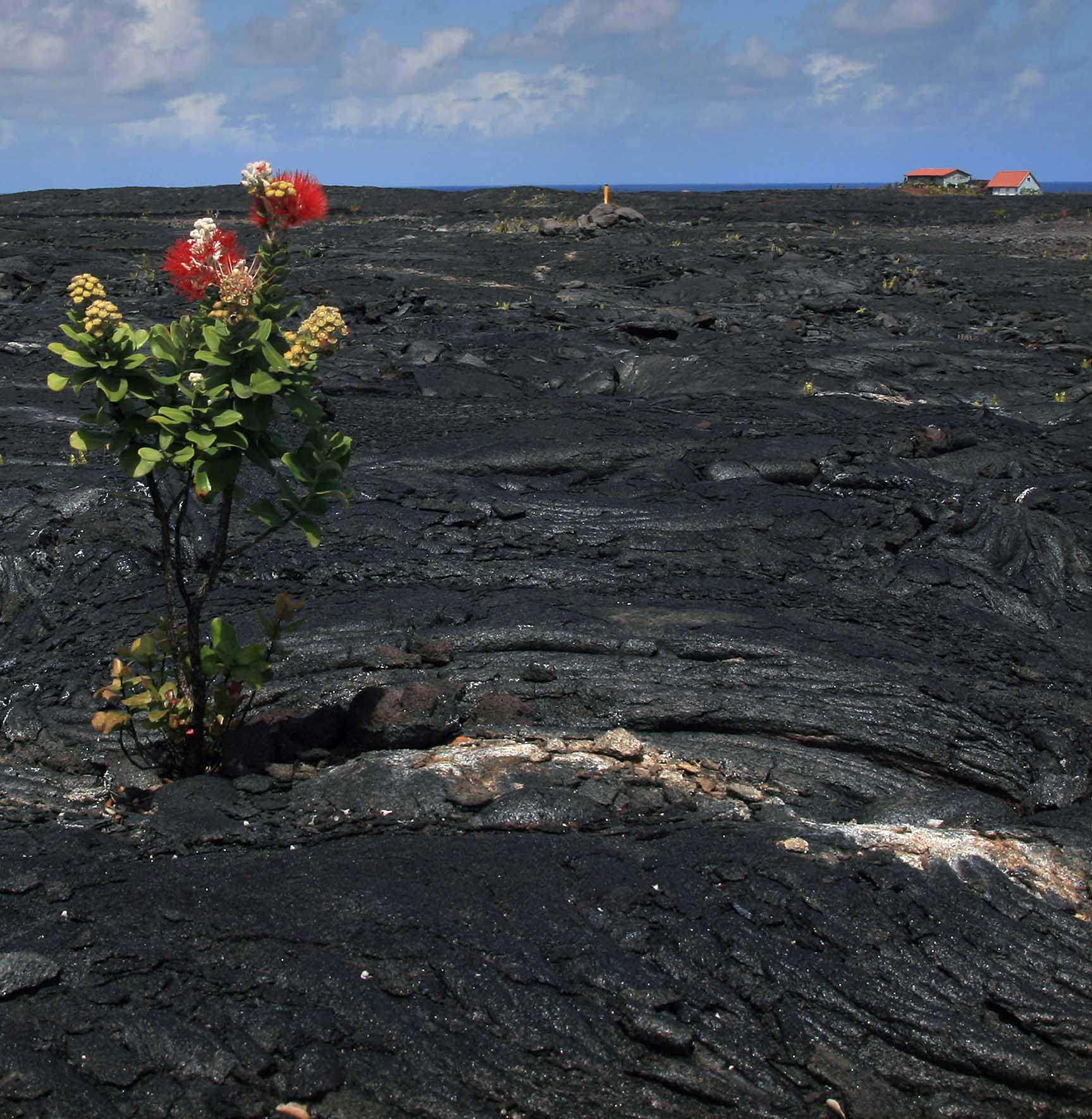 A hardy plant grows on part of the lava field from Kilauea.
Other Lava Flows
The islands that make up Hawaii have been formed by large-scale lava flows from a number of volcanoes. Many of these lava flows are still visible today.
- Click here to zoom on a large lava flow from the volcano Kilauea.
Large-scale lava flows are also visible in many other parts of the world.
- Click here to see the Uinkaret Volcanic Field, a gigantic lava flow on the north rim of the Grand Canyon in Arizona.
- Click here to zoom in on Lava Falls, a well-known feature of the Uinkaret Volcanic Field.
- Click here to see lava flows at Mt. Ruapehu, New Zealand’s largest ski and snowboard area.
- Click here to see lava flows on the side of Mt. Merapi, Indonesia’s most active volcano. It has erupted regularly since 1548.
- Click here to see lava flows on the side of Mt. Edziza in British Columbia, Canada’s highest volcano (2,787 m / 9,144 ft).