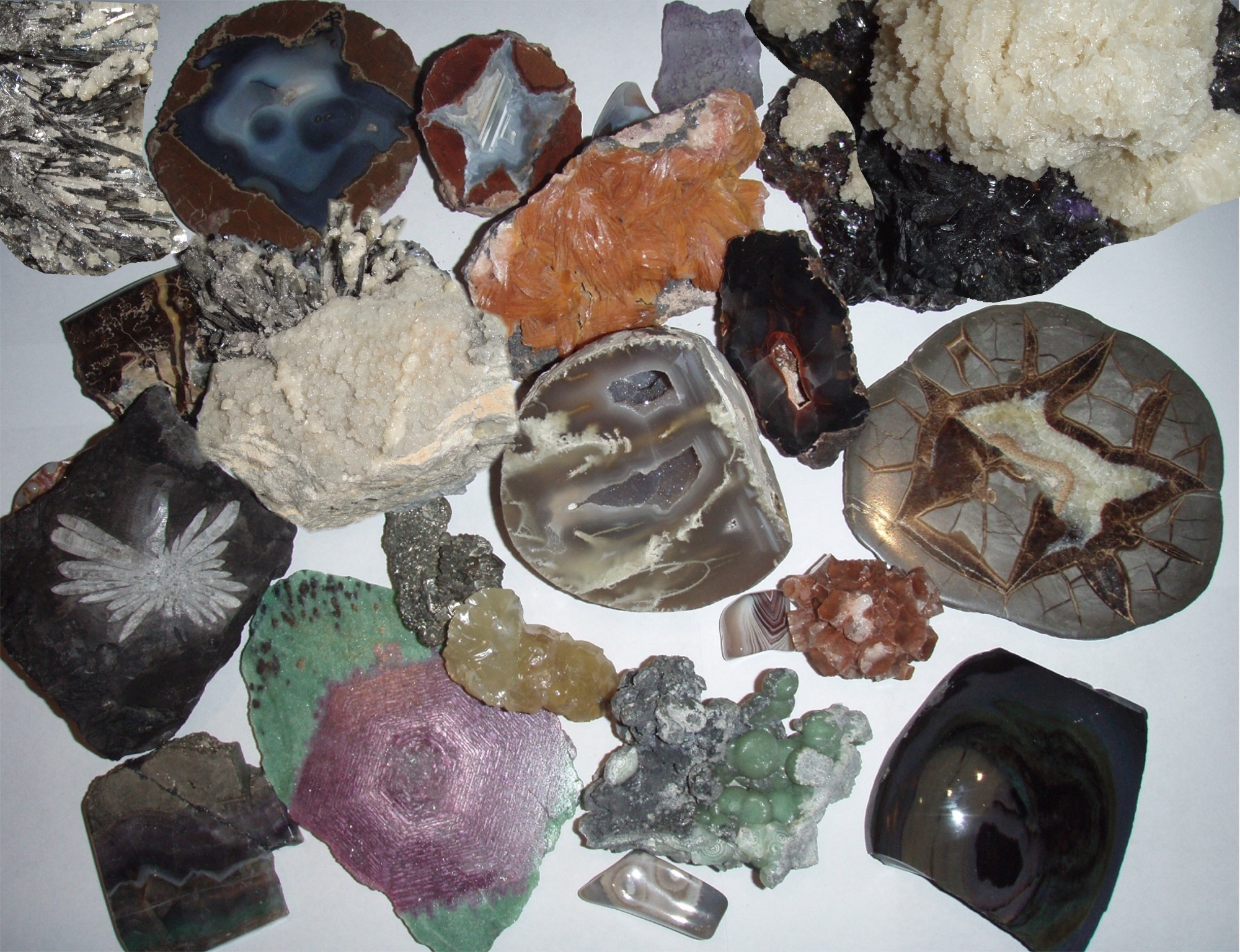
 A variety of minerals.
The Earth provides many substances that benefit humans. Items such as electrical wiring, computer chips, ceramics, and cosmetics all contain substances mined from the Earth called minerals. A mineral is a naturally occurring inorganic, crystalline solid with a definite chemical composition.
 Try This!
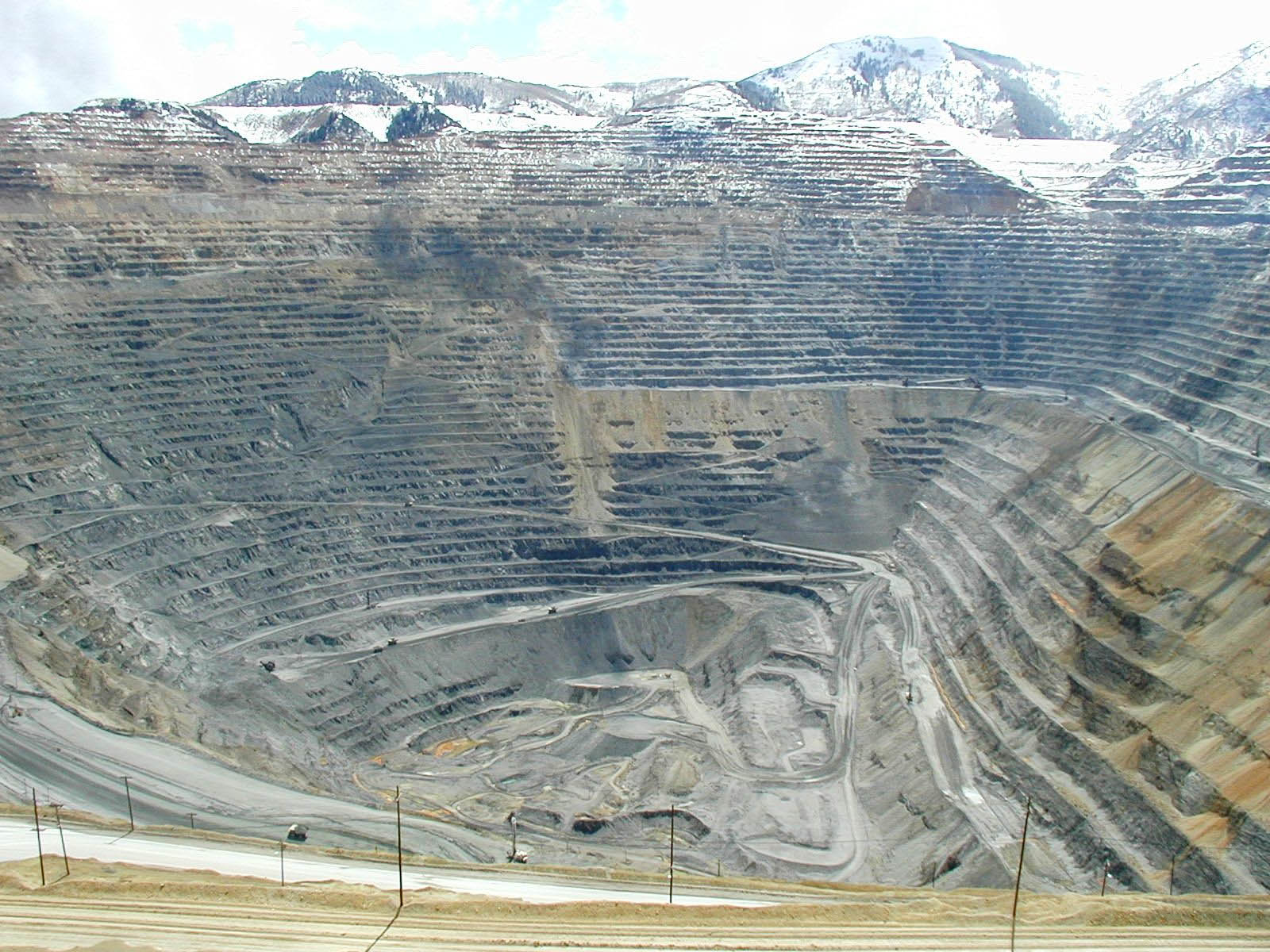 The Bingham Canyon Mine in Utah is the deepest open pit mine in the world.
Open Pit Superlatives
The simplest way to extract resources from the Earth is through the method known as open pit mining; basically just digging a big hole in the ground (see the view of the Chuquimata Mine in Chile in the main view). Although open pit mining is often the cheapest method of resource extraction, it can also be quite destructive to the environment. The economics of open pit mining have, however, resulted in the formation of some truly spectacular open pit mines on the Earth’s surface.
The Biggest: With a length of 8 km (5 miles), a width of 3.2 km (2 miles) and a depth of 180 m (535 feet) the Hull-Rust-Mahoning Mine in Hibbing, Minnesota is the world’s largest open pit mine. Iron ore has been extracted from here since 1892.
- Click here to visit the Hull-Rust-Mahoning Mine in Minnesota.
The Deepest: With a depth of 1.2 km (0.75 miles), the Bingham Canyon Mine near Salt Lake City, Utah, is the deepest open pit mine in the world. Copper has been mined here since 1863.
- Click here to visit the Bingham Canyon Mine in Utah.
The Runner-Up: Although it has a length of 11 km (6.8 miles), the overall volume of the Nchanga Mine near Chingola, Zambia qualifies it as the world’s second largest open pit mine.
- Click here to visit the the Nchanga Mine in Zambia.
Open pit mines are often quite large, and are quite visible from satellite photographs.
- Click here to see Montana.
- Attempt to locate by inspection the Berkeley Pit mine, a large open pit copper mine in Montana.
(Click here to view Berkeley Pit, if you are tired of looking.)
The Cananea Mine in northwest Mexico is one of the largest copper producers in the world.
- Click here to see northwest Mexico.
- Attempt to locate by inspection the Cananea Mine.
(Click here to view the Cananea Mine, if you are tired of looking.)