Antarctica's Warmer, Not Gentler Past
Fossils provide evidence of what life and environmental conditions were like in the past. The frozen wastes of Antarctica would at first appear to be an unlikely place to learn about the past. In 1991, however, the first carnivorous dinosaur was excavated in Antarctica. Since that time, many more dinosaur fossils have been discovered, including even a ghost forest of 99 fossilized tree stumps. Below is an excerpt from an article written by Kristan Hutchison for The Antarctic Sun, a newsletter published at McMurdo Station in Antarctica for the United States Antarctic program.
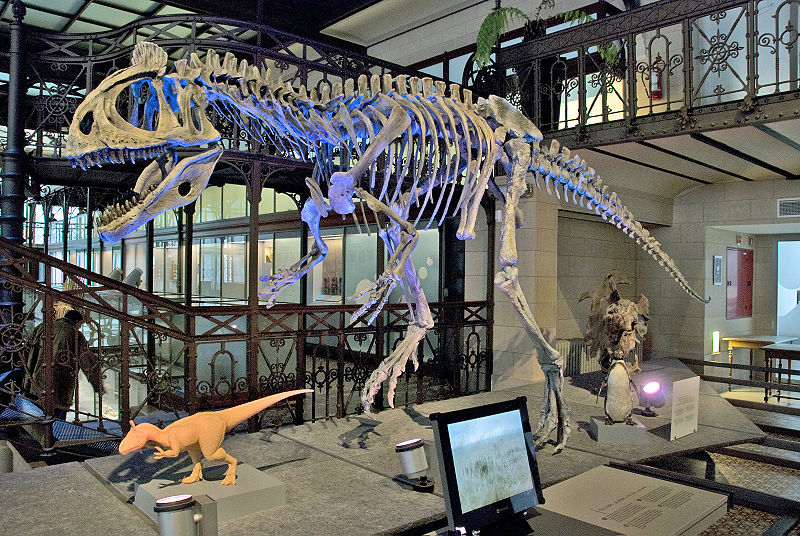 Cryolophosaurus was the first carnivorous dinosaur to be discovered in Antarctica.
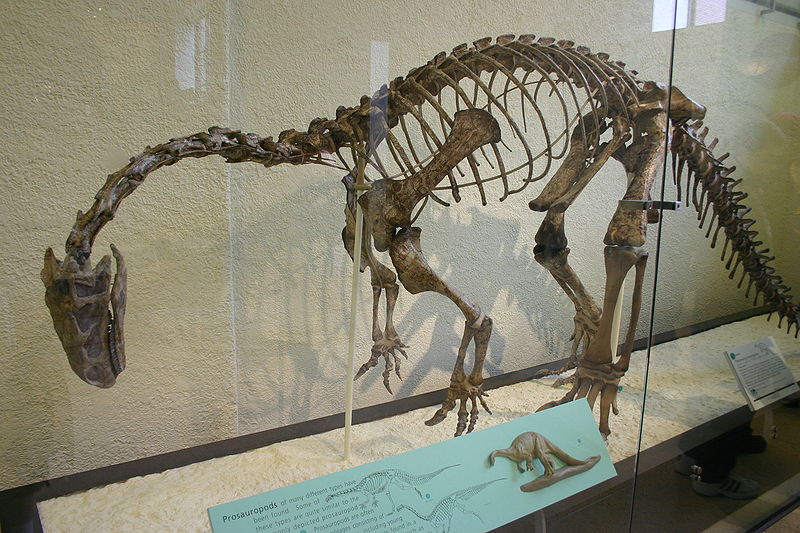 Prosauropod was an herbivore, a plant eater.
Long, long ago, back when Antarctica was a warm place, a hungry dinosaur choked on his dinner, which happened to be another dinosaur his same size.
Imagine the preceding battle - the 22-foot (6.7 meters) cryolophosaurus standing nearly upright on his two sturdy back legs while he ripped at the plant-eating prosauropod with his sharp teeth and front claws. The prosauropod slightly bigger at 25-feet-long (7.6 meters), but without defences, trying to escape as they splash together into a river bed running red with his blood.
Victorious, cryolophosaurus dined in earnest, tearing large bites from his prey. Only he should have chewed a little better, because part of a leg stuck in his throat and he died there in the riverbed.
There they lay, predator and prey, while smaller dinosaurs scavenged their bodies. There they stayed as the world slowly cooled and ice covered the continent. There they were when 200 million years later geologist David Elliot spotted a bone sticking up as he looked for rocks in the Transantarctic Mountains (with snow / without snow).
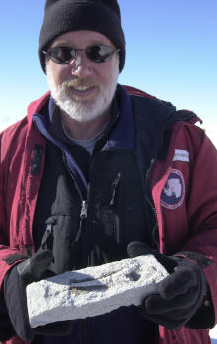 Scientist Bill Hammer holding dinosaur bones excavated on Mt. Kirkpatrick. (Courtesy: Kristan Hutchison / National Science Foundation)
Elliot radioed William Hammer, a paleontologist working further down Mt. Kirkpatrick (with snow / without snow). Hammer dug up the dinosaur bones, piecing together the story of the cryolophosaurus' last meal. He found the prosauropod leg and foot bones stuck in the meat-eater's jaw and throat. The scavenging dinosaurs had left tooth marks--and a few teeth--in cryolophosaurus' legs.
The cryolophosaurus, or "frozen-crested lizard," turned out to be a whole new species and an important find in the evolution of early carnivorous dinosaurs, Hammer said. It was about 40 million years older than the next dinosaur in its evolutionary line.
That and other discoveries of fossil remains have helped puzzle together what Antarctica was like before it froze over. Hammer has found animals living at three different time periods, from pre-mammals and giant amphibians living 245 million years ago, to the dinosaurs 200 million year ago. The amphibians are evidence that Antarctica was once warmer, Hammer said. They weren't migratory and couldn't have survived if the water froze in the winter.
"We envision sort of a cool, temperate climate kind of thing, kind of like coastal Oregon or Washington today," Hammer said. "It was too high latitude to be hot, but winters weren't all that harsh."
... For much of that time Antarctica wasn't centered on the South Pole, but sat partially outside the Antarctic Circle. At the time cryolophosaurus choked on his last meal in what would become the Transantarctic Mountains, he was living around 65 to 70 degrees south latitude.
... For most of that time, Antarctica would have been green, not white. Lush forests of ginkgo, ancient conifers, ferns, and moss supplied habitat and food for the animals and birds.
(Courtesy: Kristan Hutchison, staff writer, The Antarctic Sun, U.S. Antarctic Program, National Science Foundation (NSF), November 10, 2002 - "When the ice was green and growing.")
Questions for Comprehension and Understanding:
- Why did the victorious cryolophosaurus dinosaur die? The cryolophosaurus died because it choked on a piece of leg stuck in its throat.
- How long ago did this dinosaur battle occur? The battle occurred 200 million years ago.
- How do we know that cryolophosaurus was set upon by scavenging dinosaurs? "The scavenging dinosaurs had left tooth marks--and a few teeth--in cryolophosaurus' legs."
- Why do amphibian fossils provide evidence that Antarctica was once warmer? Amphibians aren't "migratory, and couldn't have survived if water froze in the winter."
- What kind of climate did Antarctica have at the time of the dinosaurs? It had "a cool, temperate climate ... like coastal Oregon or Washington today."
- Where was Antarctica located at the time of the dinosaurs? "For much of that time Antarctica wasn't centered on the South Pole, but sat partially outside the Antarctic Circle."
- Describe the vegetation in Antarctica at the time of the dinosaurs. "For most of that time Antarctica would have been green, not white. Lush forests of ginkgo, ancient conifers, ferns, and moss supplied habitat and food for the animals and birds."