A3-2
Major Features of Continents
Geographers use the term topographic feature to refer to a surface feature of the Earth. Continents and oceans each have their own distinguishing topographic features.
Continents: Continents generally have two large distinguishing topographic features: mountain ranges and stable interiors.
- Mountain Ranges: Long ranges of mountains are the most obvious physical feature of the continents. Major folding of the crust has resulted in dramatic ranges such as the Alps in Europe, the Rocky Mountains in North America, the Andes in South America, and the Himalayas in Asia. These ranges are considered “young” and are less than 100 million years old. Older mountain ranges, like the Appalachians in the eastern United States and the Urals in Russia, have been worn down by erosion and are over 200 million years old.
- Stable Interior: Apart from the mountain belts, the remainder of most continents consists of large, relatively flat stable areas. These areas may have been geologically active in the distant past, but have remained largely unchanged for hundreds of millions of years. The Canadian Shield, for example, with an area of 4.8 million km2 (1.8 million square miles) covers a significant portion of Canada. Rocks found at Great Bear Lake have been dated with an age of 3.96 billion years.
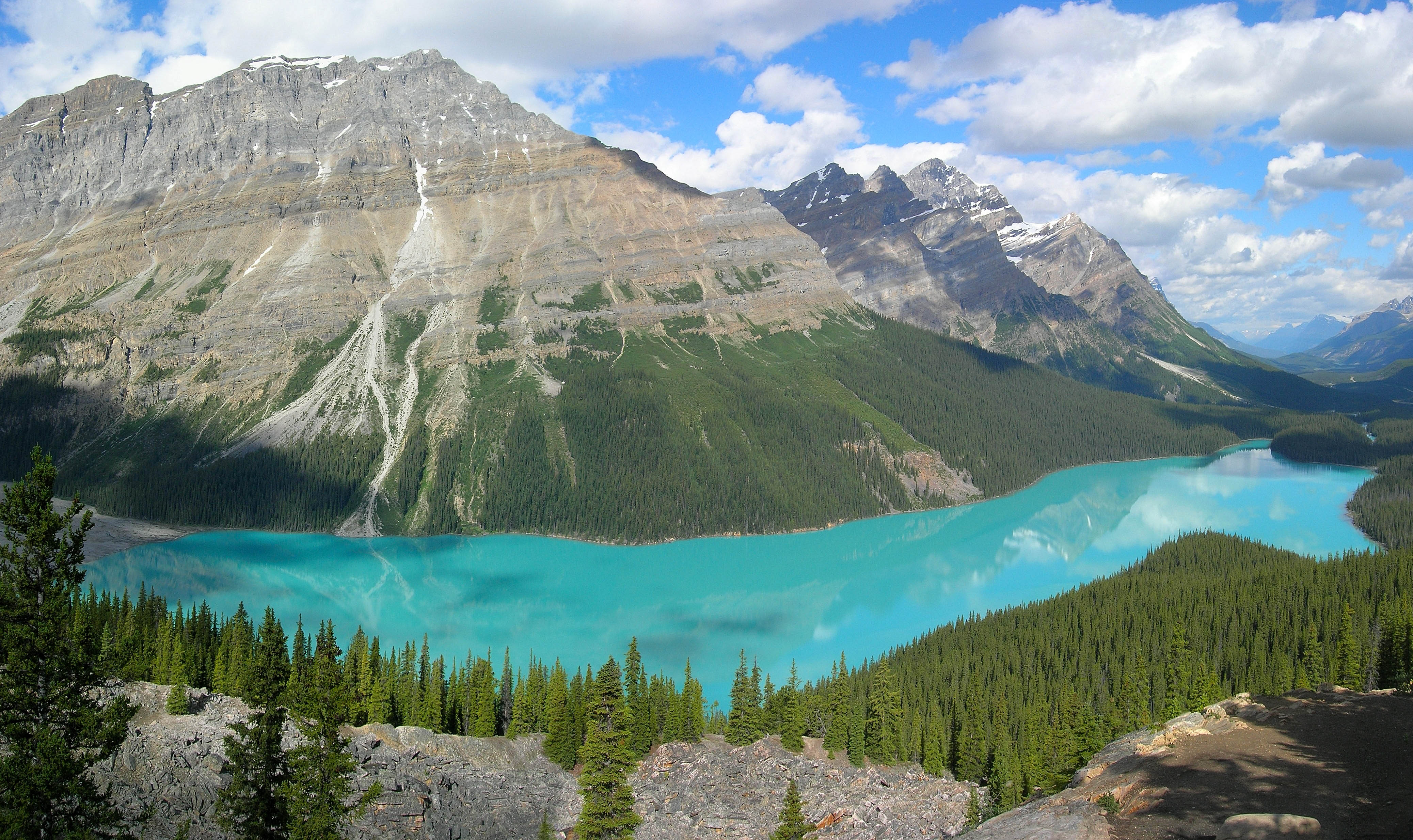 The Rocky Mountains in Banff National Park in Alberta, Canada are estimated to be approximately 80 million years old.
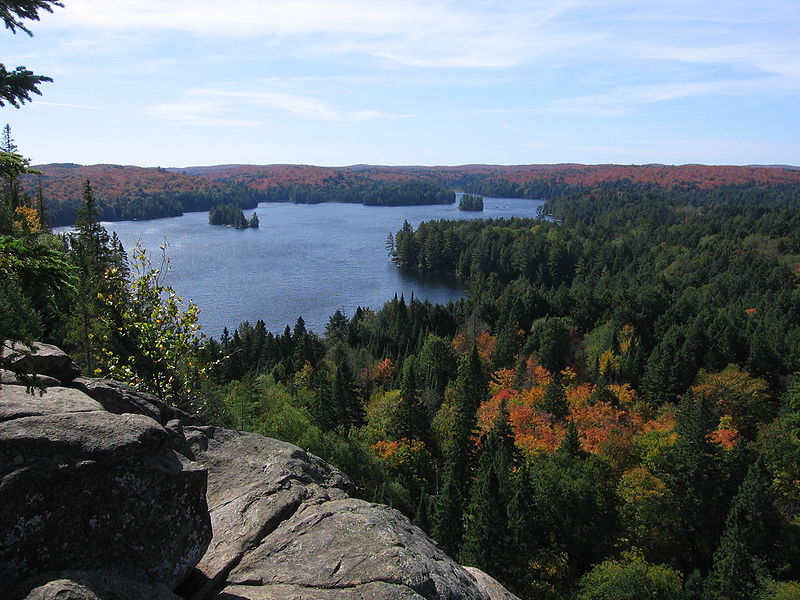 A view of the Canadian Shield from the Cache Lake Lookout in Algonquin Park in Ontario, Canada.
 Travel Link
Try This!
Travel Link
Try This!
The North American Prairies
Prairie grasslands are a major feature of North America’s stable interior.
- Click here to view North America. National borders have been added.
- Use the polygon tool located on the right hand side of the main view to mark in where you think the Prairie grasslands are located in North America.
- Click here to see a map of soils of North America in order to check your location of the Prairies. Prairie grasslands are indicated with a green color.