 Did You Know?
It's Lonely Out There
Earth is the only body in the solar system that, to the best of our current knowledge, possesses a biosphere.The biosphere is the subsystem composed of all living things on the Earth and their habitats. This includes all living organisms on land, in the water, and in the air. Not only does the biosphere include all animals, but it also encompasses the complete range of life from tiny, single-celled organisms like the amoeba up to, and including, giant living organisms like a Sequoia tree.
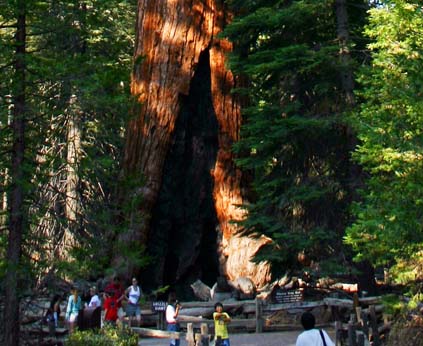 The "Grizzly Giant" Sequoia tree in Yosemite National Park. Giant Sequoias are the world's largest trees as measured by total volume and can grow up to 85 meters (280 feet) high and 8 meters (24 feet) in diameter. Based on tree ring count, the oldest known Giant Sequoia is about 3,500 years old.
What Do You Think?
The "Grizzly Giant" Sequoia tree in Yosemite National Park. Giant Sequoias are the world's largest trees as measured by total volume and can grow up to 85 meters (280 feet) high and 8 meters (24 feet) in diameter. Based on tree ring count, the oldest known Giant Sequoia is about 3,500 years old.
What Do You Think?
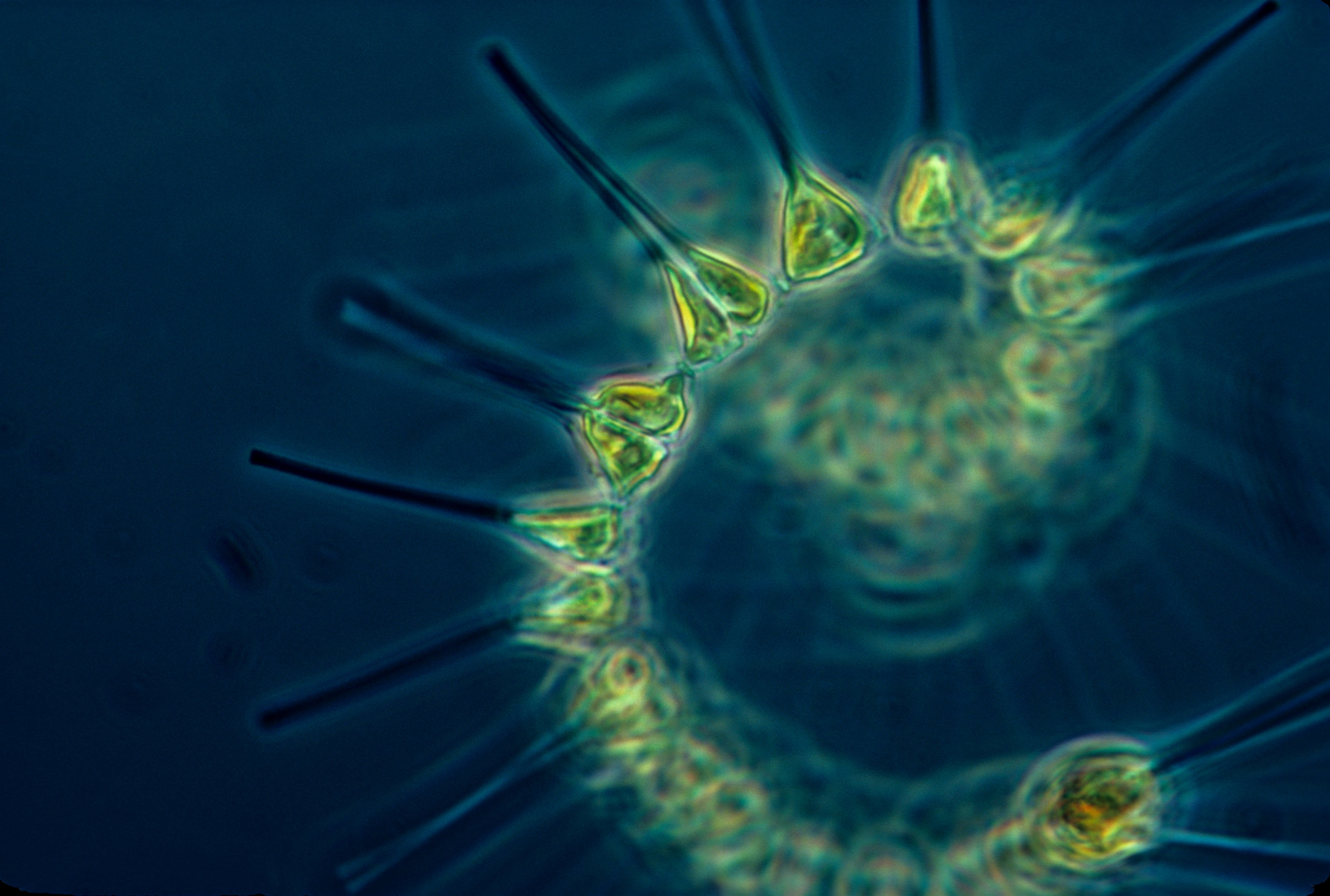 Phytoplankton appears green because of the presence of chlorophyll in its cells.
The Gulf of Mexico Dead Zone
Marine organisms such as phytoplankton can be an important source of oxygen production.
- Click here to see a marine chlorophyll map. (Chlorophyll is an important ingredient for oxygen production.)
Carefully examine the scale on the map.
- Which color represents areas that should be high in oxygen production?
The color red represents the greatest concentration of marine chlorophyll. These areas would be expected to have the highest oxygen production.
- Click here to zoom in on the Gulf of Mexico coastline for Louisiana and Texas.
- Should this area be rich in marine organism oxygen production? Explain.
Yes, this area would be expected to be rich in oxygen production. This is because it possesses high levels of marine chlorophyll with corresponding large quantities of phytoplankton.
Starting in the early 1980s, however, a dead zone began to appear in this area. A dead zone is a marine area that is very low in oxygen content. This low oxygen content results in the death of a large number of marine organisms in the affected area.
- Click here to see the current size of the Gulf of Mexico dead zone.
- What do you think could be causing this dead zone in the Gulf of Mexico?
The dead zone is caused by high nutrient runoff from the Mississippi River and its drainage basin. This high nutrient runoff consists primarily of fertilizer residue, in particular, nitrogen and phosphorus. This high nutrient content in the water can lead large increases in the amount of certain kinds of phytoplankton. Unfortunately, these types of phytoplankton consume more oxygen at night during cell respiration than they produce during the daytime through photosynthesis. This imbalance causes oxygen depletion in the surrounding water resulting in the creation of a dead zone.